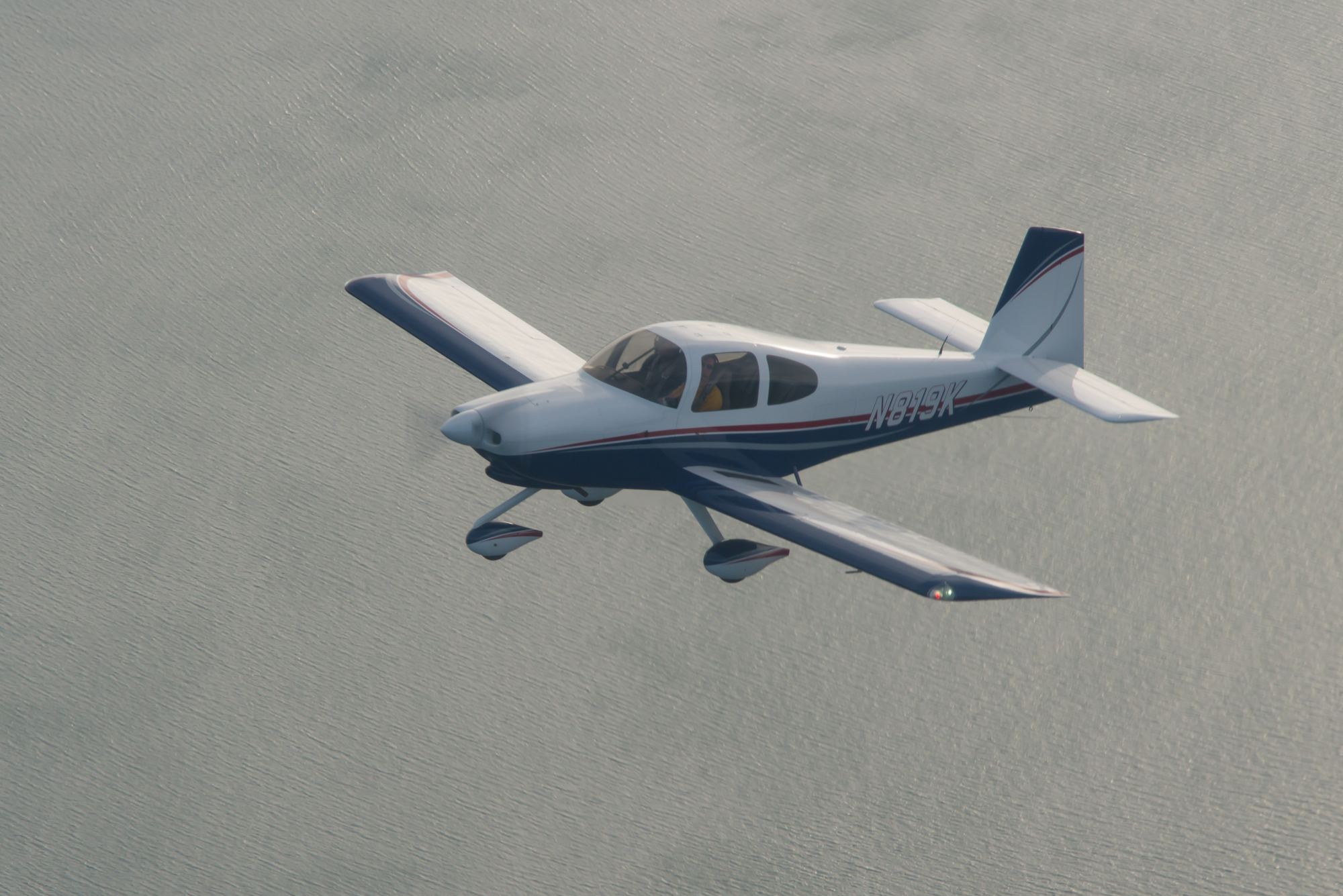
N819K in flight over the water
Flying Raccoons · Rob & Kelly Kochman

N819K

We built our Van’s RV-10 between 2007 and 2011, mostly in our garage. This is the story of the build and the flying since, drawn from our original blog.

Tail kit pickup
Aug 26, 2007
First flight
Mar 5, 2011
Build time
1,287 days
Log entries
199
Build clock · drag to scrub
Search all 199
The finished airplane

N819K, Spec by Spec

From Rob’s “Build Your Own Airplane!” talk, last updated February 2022. RV-10 figures are for the type; the engine, panel and costs are ours.

Van’s RV-10 The type

Seats
4
Cruise
160 kt (185 mph)
Range
800+ mi
Stall
52 kt
Empty / gross weight
1,630 / 2,700 lb
Wingspan
32 ft
Wing loading
18.6 lb/sq ft
Fuel
60 gal
Takeoff / landing distance
500 / 650 ft

Engine & Prop Safety first

Engine
Lycoming IO-540-D4A5
Built by
Aero Sport Power
Power
260 hp at 2,700 rpm
Induction
Normally aspirated
Ignition
Mag bottom, electronic top
Propeller
Hartzell 80″, 2-blade
Prop type
Constant speed

Chosen to be boring on purpose: new, standard design, standard compression.

The Panel What it had to do

  • Safe and simple
  • IFR-capable, with VOR, localizer/glideslope and GPS
  • Two independent sources of attitude
  • Safe to fly even if the main electrical bus fails
  • Save money where it makes sense

What’s in It As of 2022

Flight, engine & autopilot
Dynon
IFR GPS / nav / com
Garmin GNS 430
Second com
Icom A200 (used)
Audio panel
Garmin 240
Moving map
iPad mount GPSMAP 696
Transponder
Stratus ESG, ADS-B KT 76A
Backup attitude
TruTrak ADI
Backup airspeed
Steam gauge

Struck-through items were the originals. The KT 76A was a gift.

Time & Money As of 2022

Build time
3.5 years, 2007–2011
Build cost
~$140,000
Fixed cost
$675 / month
  Hangar
$400
  Insurance
$175
Flying cost
$90 / hour

Hourly cost includes saving toward the next engine overhaul.

Upkeep Since 2011

Oil change
Every 4 months
Condition inspection
Yearly, done by Rob

Surprises along the way

  • Leaky fuel tank
  • Leaky fuel flow sensor
  • ELT broke (twice)
  • Autopilot shear screw
  • Defective prop governor
  • Lighting controller
  • Shorted strobes
  • Heated pitot recall

Thoughts on Building Looking back

Glad we did

Split the forward tunnel cover. Cutting it in two ahead of the fuel valve means the front half comes off without removing the seats and fuel valve, so checking the tunnel for fuel leaks is easy, and we actually do it, which matters most in the early hours of flying.

Would do differently next time*

Skip the “Safety Trim” controller. It limits trim to a few seconds at a time, which guards against runaway trim but makes re-trimming on a go-around take forever. The two speeds aren’t needed, and it’s more weight, more cost and one more thing to break.

* There will not be a next time, according to Kelly.